Are We Asking the Right UX Questions About AI?
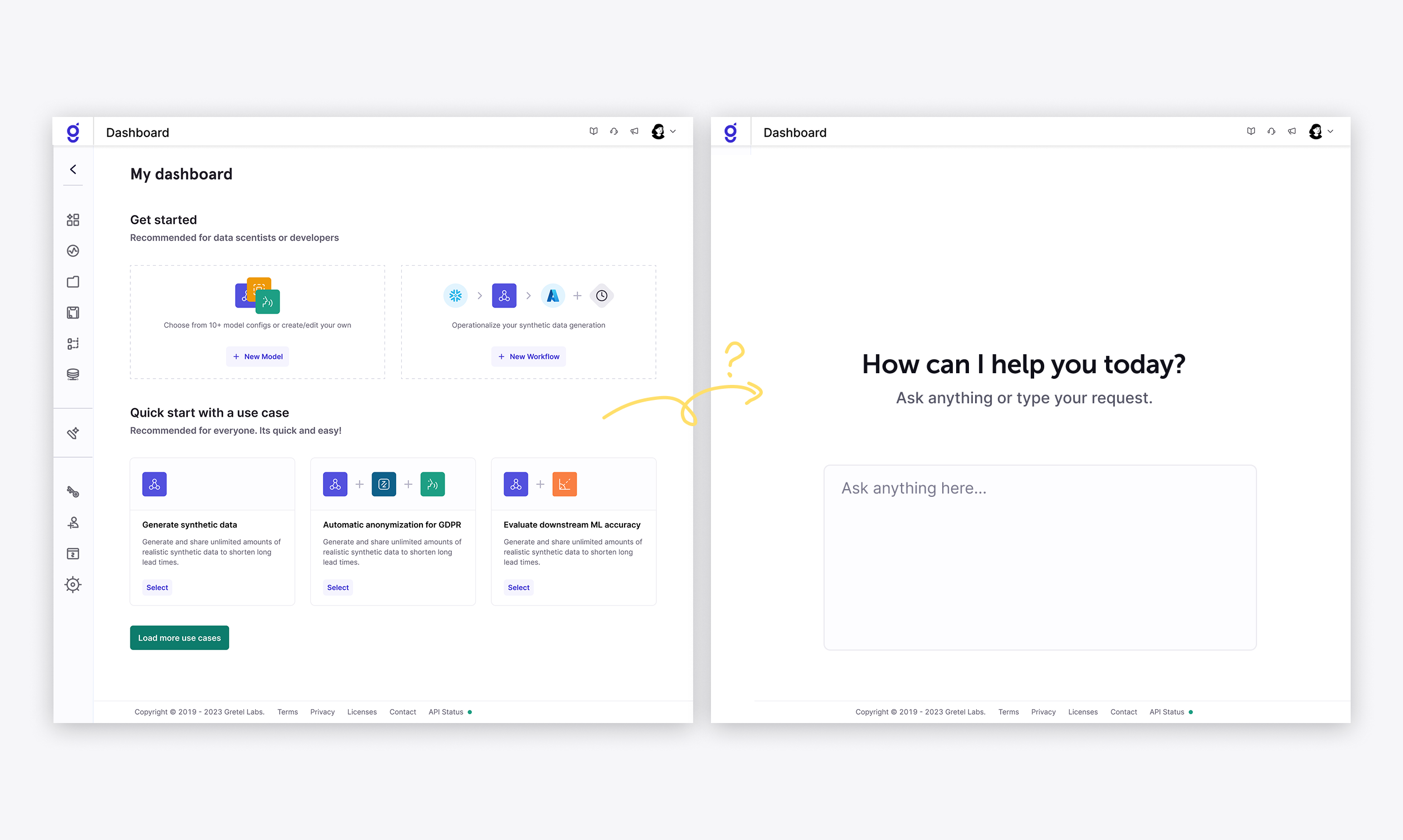
As AI products shift from navigation-first interfaces toward intent-driven experiences, I've been wondering what we might lose along the way. People don't always know exactly what they want or what's possible before they begin exploring. Perhaps the future isn't about replacing navigation with conversation, but designing interfaces that help people discover what they want and guide them toward expressing their intent.
Intro
A few days ago, I published an article reflecting on how AI has changed my workflow as a product designer. The biggest surprise wasn't that AI helped me design faster. It was that AI encouraged me to make better design decisions.
As I spent more time experimenting with tools like Claude Code, Cursor, and Figma AI, another question slowly emerged: one that has very little to do with designers and everything to do with everyone else.
If AI products are going to become part of our everyday lives, who are we actually designing them for? What happens when every product becomes an AI product?
Suddenly, we're no longer only thinking about AI coding assistants or tools designed for people already comfortable working with AI. We're thinking about restaurants, banks, hospitals, travel, retail, education, and the products that millions of people interact with every day.
Those users won't necessarily understand how AI works. They won't all know how to write a good prompt, and they shouldn't need to understand the underlying technology before they can use a product confidently. They may simply want to order dinner, choose a bank account, plan a holiday, buy a jacket, or book an appointment.
That feels like a much bigger design challenge. And it's what led me to another question: as we move toward intent-first and agent-first interfaces, are we asking the right UX questions?
Everyone Is Talking About Intent-First Interfaces
One of the most exciting conversations in product design today is the shift toward what different companies describe as intent-first, agent-first, or intent-driven experiences. Although the terminology varies, the underlying idea is remarkably consistent.
Rather than asking users to navigate software feature by feature, we can begin with a much simpler question:
“What are you trying to accomplish?”
Microsoft describes this future as moving toward intent-driven computing, where people become the “boss” of AI agents rather than operators of individual applications. Google is exploring similar ideas through projects like A2UI, where AI can dynamically generate interfaces depending on the user's task instead of relying entirely on static screens. Across many AI startups, we're seeing a similar philosophy emerge: interfaces are becoming less about navigating features and more about understanding user intent.
It's a compelling direction, and I'm excited by it too.
But after spending the past few weeks working much more deeply with AI products, I started wondering whether we're also overlooking something.
Then I Opened Yet Another AI Tool...
During the past two weeks, I've been rebuilding my own workflow around AI tools. The first time I opened Cursor, I paused for a moment—not because it was confusing, but because it felt surprisingly familiar.
There was a large conversational area, a handful of suggested prompts, and very little visual explanation of what made Cursor fundamentally different from several other AI products I'd explored that week.
As a designer, I eventually understood those differences. But I found myself wondering: Would someone completely new to AI know the difference? Or would many AI products simply feel like another conversation waiting for the user to decide what to ask?
That was the moment I realised this wasn't really a question about design tools anymore.
It was a question about future products.
If Every Product Becomes an AI Product...
Imagine walking into a restaurant. Instead of being handed a menu, you're greeted by an AI assistant that simply asks:
“What would you like to eat today?”
At first, it sounds wonderfully simple. Until you realise that many people don't actually know.
Sometimes we browse a menu because we're curious. Sometimes we're looking for inspiration. Sometimes the menu teaches us what the restaurant is known for. Sometimes we didn't know we wanted something until we saw it.
The menu isn't simply navigation. It's part of the experience.
And this extends far beyond restaurants. Imagine shopping for clothes without browsing a collection, planning a trip without exploring destinations, or choosing a financial product without first seeing and comparing the available options.
If every product eventually becomes an AI product, then this question becomes much larger than how we design coding assistants or productivity tools.
If we remove navigation completely, what helps people discover what's possible?
Should Every User Become a Prompt Engineer?
One of the biggest assumptions behind many AI products is that users naturally know how to express what they want.
As designers and developers, we often know how to express what we want. We understand the domain, have some idea of what's possible, and know how to refine a request after the first attempt.Most people don't necessarily have that context.
Google's UX research around agentic AI highlights a similar challenge: relying on chat alone can place too much cognitive load on users, and many experiences benefit from interfaces that progressively guide people toward their goals rather than expecting perfect prompts from the beginning.
That observation resonated with me because even someone already interested in technology can occasionally struggle to know what to ask. How will everyday users feel when the same interaction model begins appearing in banking, healthcare, travel, education, retail, and other products they use every day?
Perhaps prompting shouldn't become a required skill. Perhaps great user experience should reduce the need for prompt engineering altogether.
Maybe We're Having the Wrong Debate
Much of today's discussion asks whether AI should replace traditional navigation. I'm beginning to wonder whether that's the wrong debate.
Perhaps the future isn't about choosing between navigation and conversation. Perhaps it's about helping people discover their intent before asking AI to execute it.
Navigation solved real problems. It helped people explore, compare, browse, understand what's available, and build confidence before making a decision.
Conversation solves different problems. It can remove friction, personalise an experience, respond to context, and adapt dynamically to what someone needs.
These interaction models don't necessarily need to compete. Maybe great AI products don't eliminate one in favour of the other. Maybe they combine both.
The question then becomes much more interesting. Instead of asking “How do we replace navigation with AI?”, perhaps we should be asking: “What should an interface do when AI can understand intent?”
A Thought I'm Currently Exploring
While reflecting on these questions, I found myself describing an idea that has been useful in organising my own thinking. I currently call it Intent-Assisted Design.
Not because I believe it's a new methodology, and certainly not because I think it's the answer. It's simply a framework that's helping me think through this transition.
Instead of choosing between navigation-first and prompt-first experiences, what if interfaces actively helped people discover and express their intent?
That might involve suggestions and examples when someone doesn't know where to begin. It might involve visual exploration when browsing is useful, traditional interaction patterns when they provide clarity, contextual recommendations when the system understands enough to help, and conversation when language is genuinely the easiest way to communicate.
In other words: suggestions, examples, context, conversation, visual exploration, traditional interaction patterns, and AI working together rather than competing.
Perhaps the interface doesn't disappear. Perhaps its purpose changes—from helping users find features to helping them discover possibilities.
That's the possibility I find much more interesting than simply replacing every menu, dashboard, and workflow with a chat box.
I'm Still Exploring These Questions
One thing I've learned over the past few weeks is that AI has made me much more comfortable saying: “I don't know yet.”
The industry is still evolving. Our products are still evolving. Perhaps our design principles should evolve too.
That's also why I don't want to present Intent-Assisted Design as a conclusion. I'm much more interested in using it as a starting point for experimentation. What happens when we deliberately combine the discoverability we've learned from decades of interface design with the flexibility of conversational and agentic systems? What should remain visible? What can disappear? When should AI act, and when should the interface help people understand their choices first?
Instead of ending with answers, I'd rather leave you with the questions I'm still thinking about:
- - Are we designing AI products primarily for AI power users?
- - Should users learn prompting, or should products reduce the need for it?
- - If navigation becomes less important, what principles replace it?
- - What lessons from decades of product design should we intentionally preserve?
- - If every product eventually becomes an AI product, what responsibility do we have to ensure those experiences remain discoverable, approachable, and inclusive?
I'd genuinely love to hear how other designers and people outside design are thinking about these questions.
Because I don't think we're debating whether AI changes interfaces anymore. I think we're beginning to debate what great user experience looks like in an AI-first world.
