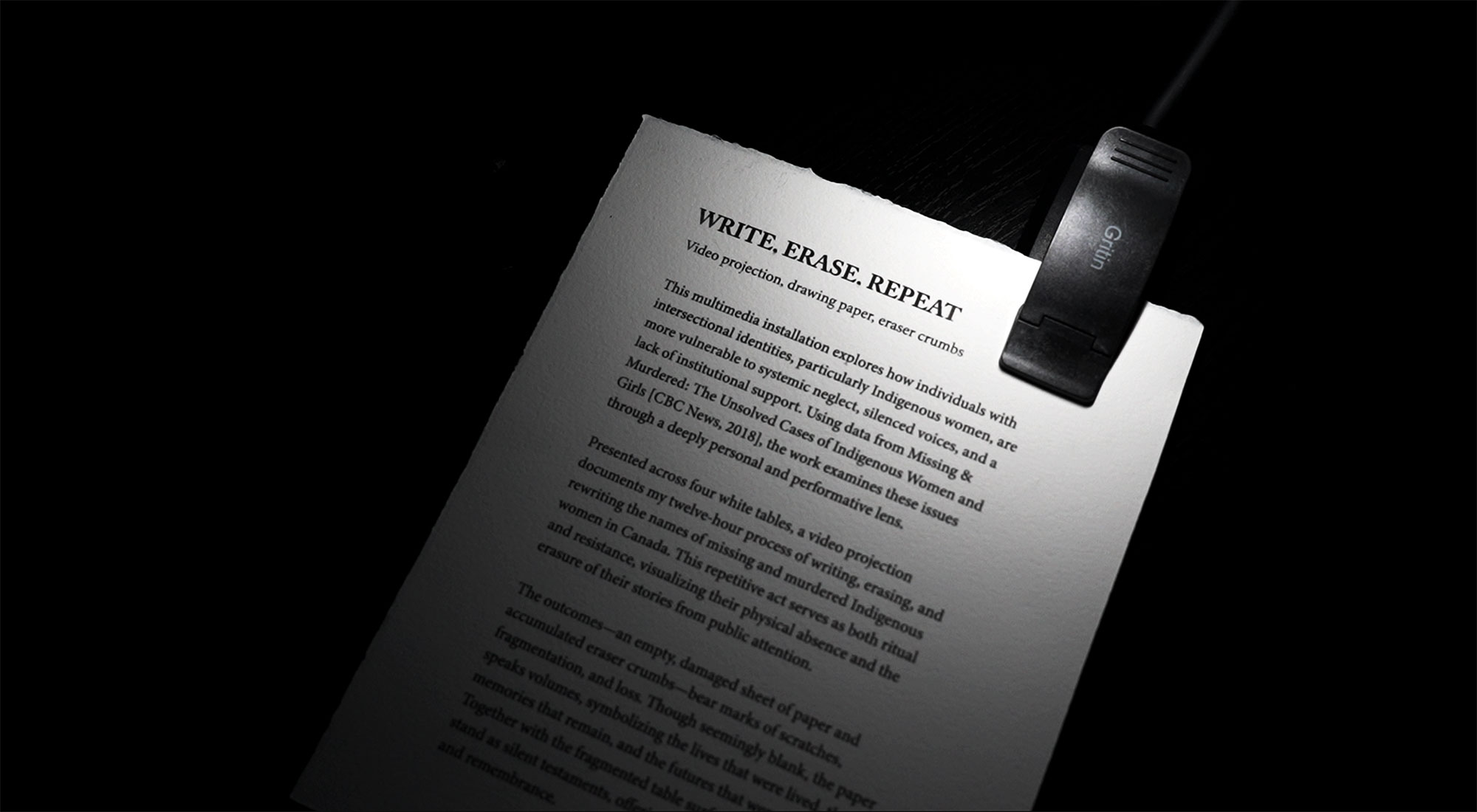
WRITE, ERASE, REPEAT is a multimedia installation exploring how intersectional identities, particularly those of Indigenous women, become vulnerable to systemic neglect, silenced voices, and institutional failure. Grounded in the CBC News database Missing & Murdered: The Unsolved Cases of Indigenous Women and Girls (2018), the work transforms data into a performative act of writing, erasing, and remembering.
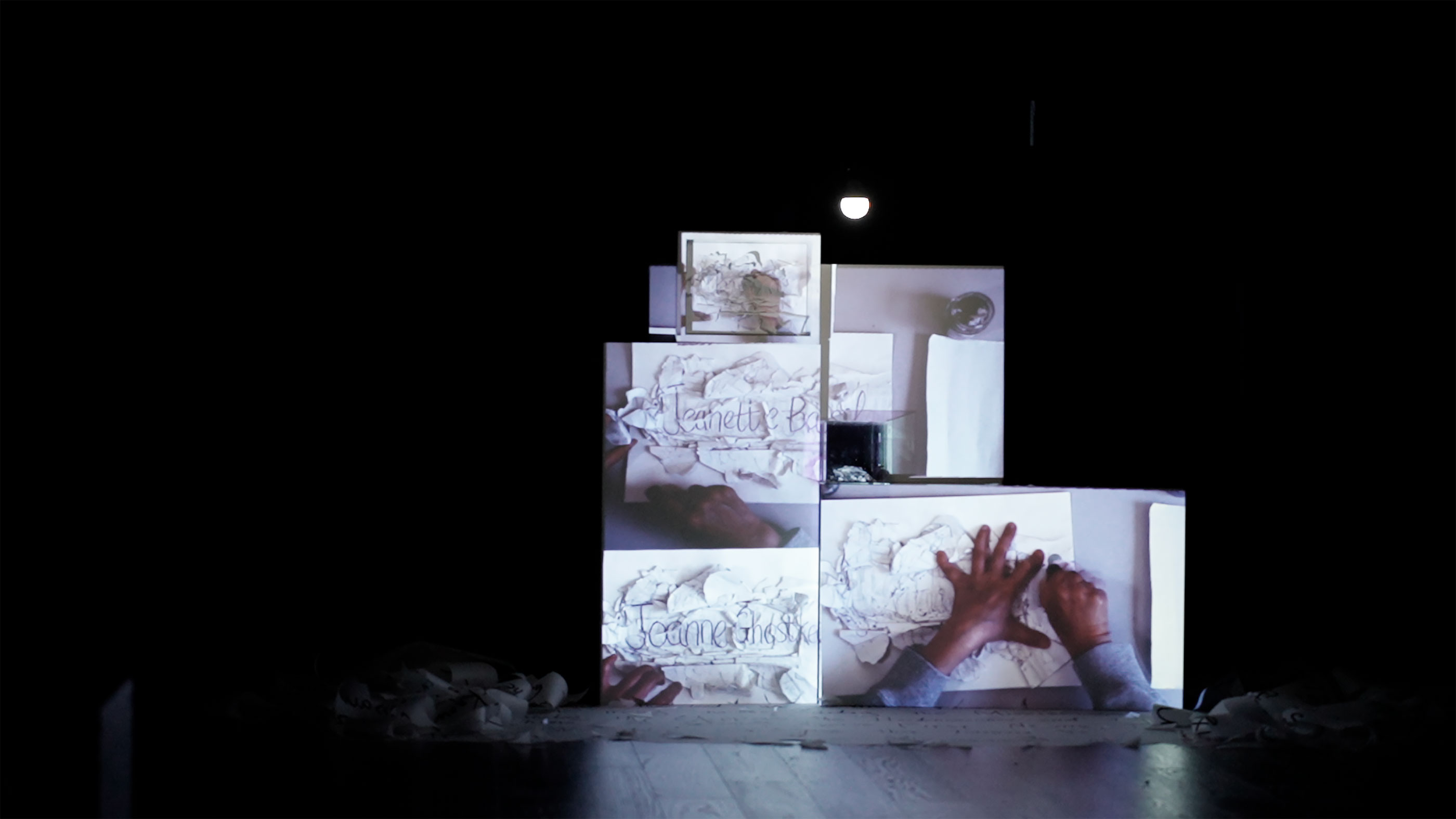
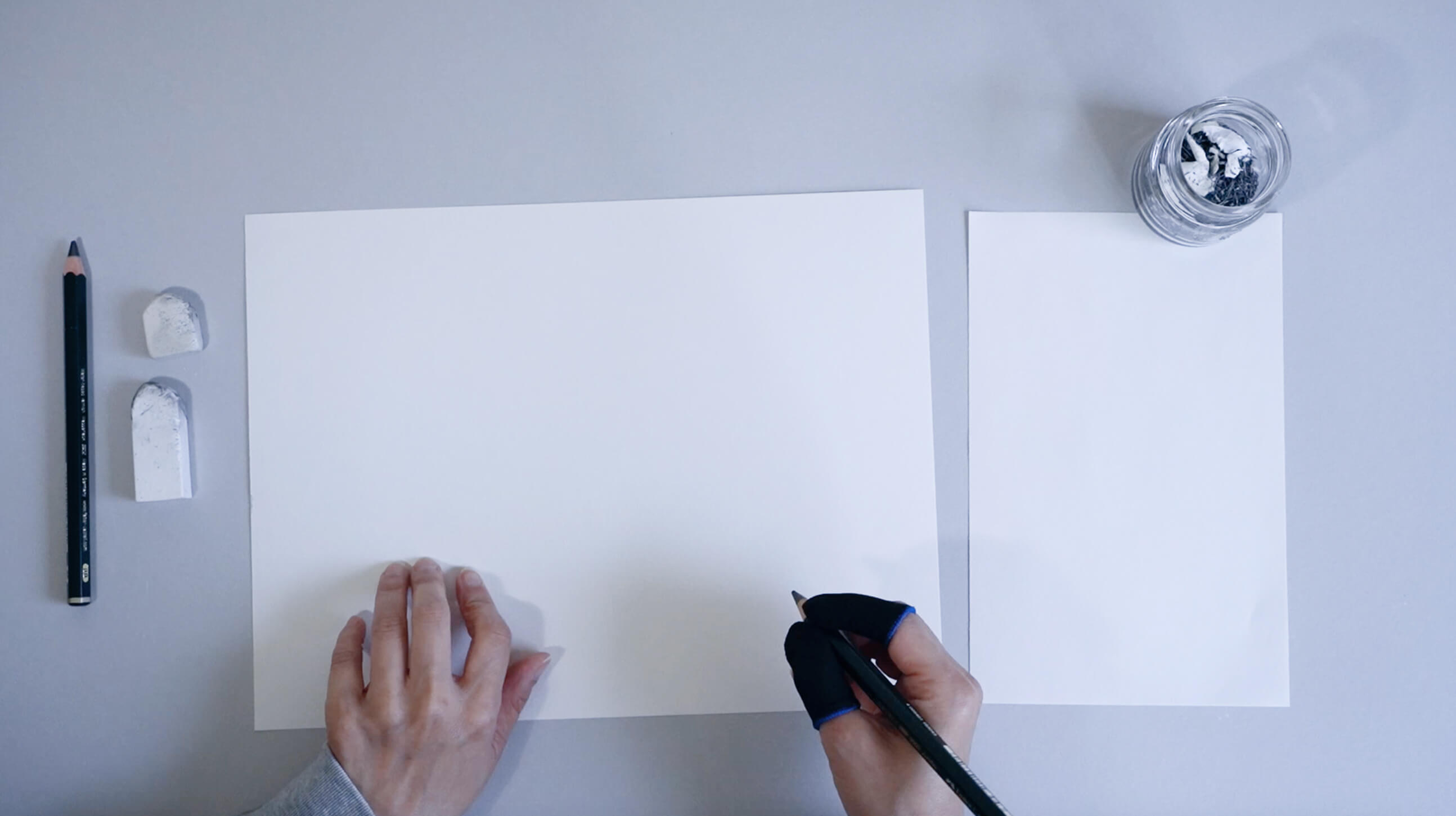
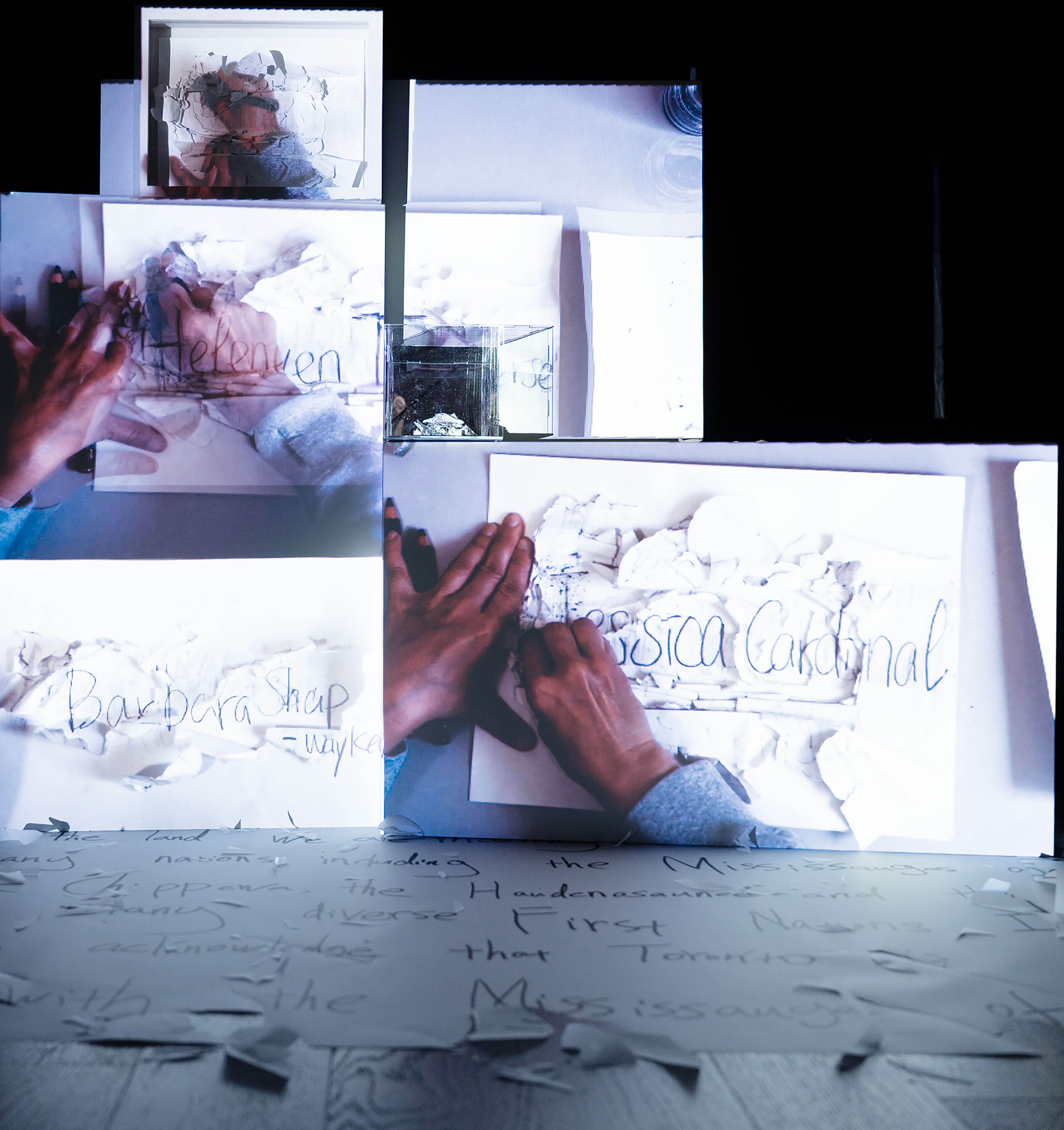
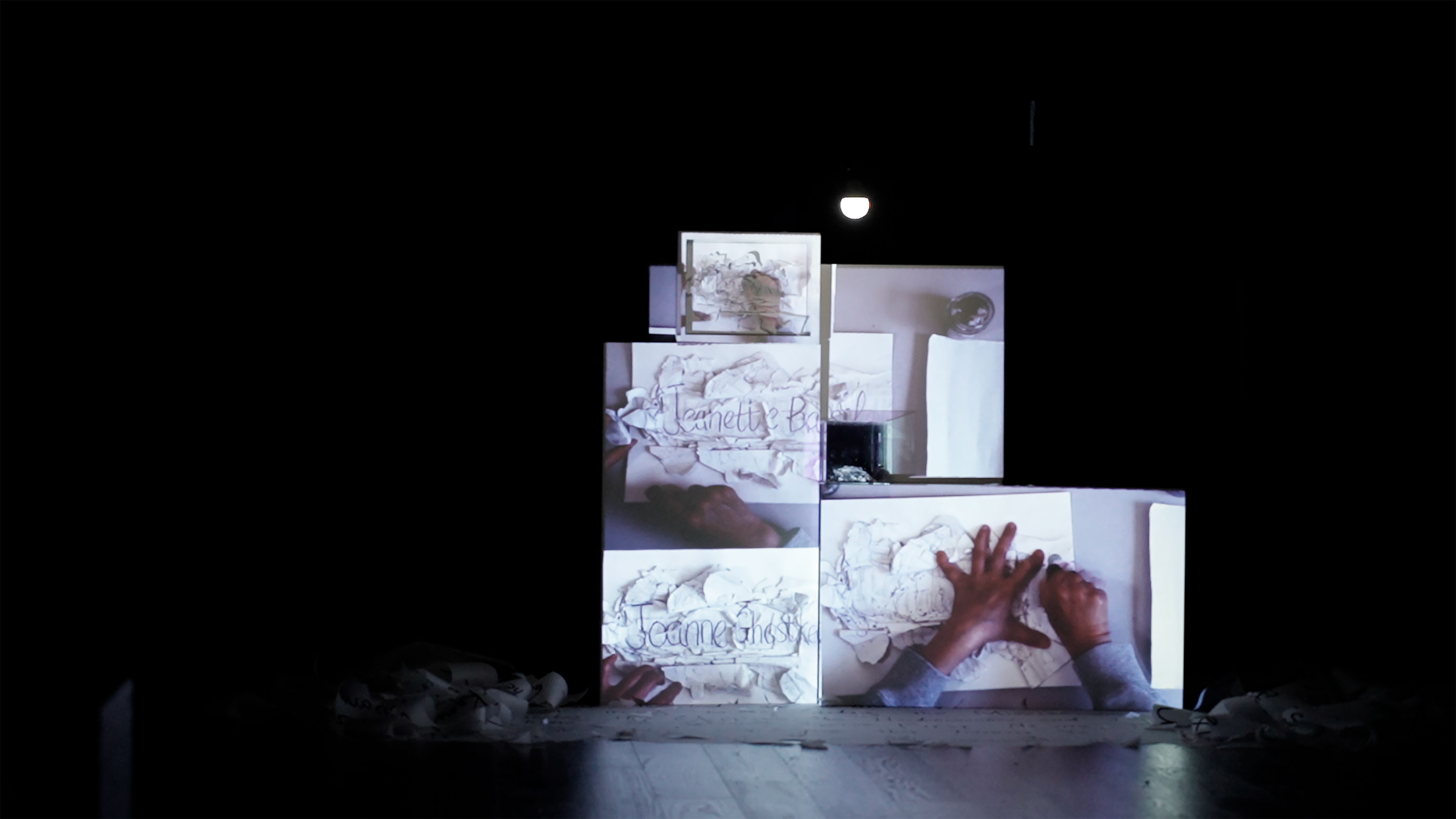
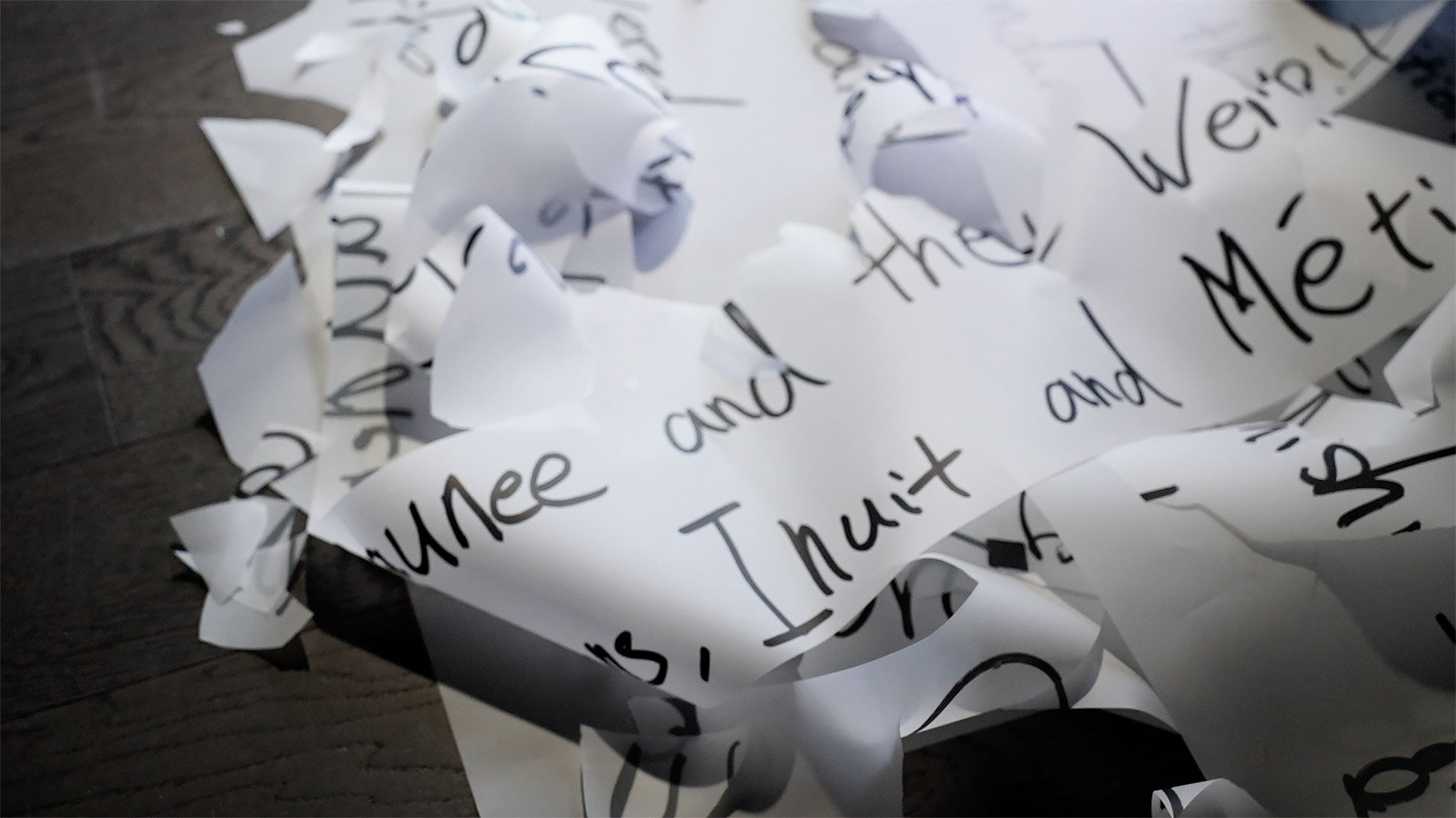
At the centre of the installation, video projections document my 12- hours continuous process of writing, erasing, and rewriting more than 300 names of missing and murdered Indigenous women in Canada. The repetitive gesture becomes both an act of remembrance and a visualization of physical absence, social erasure, and the exhausting cycle of loss.
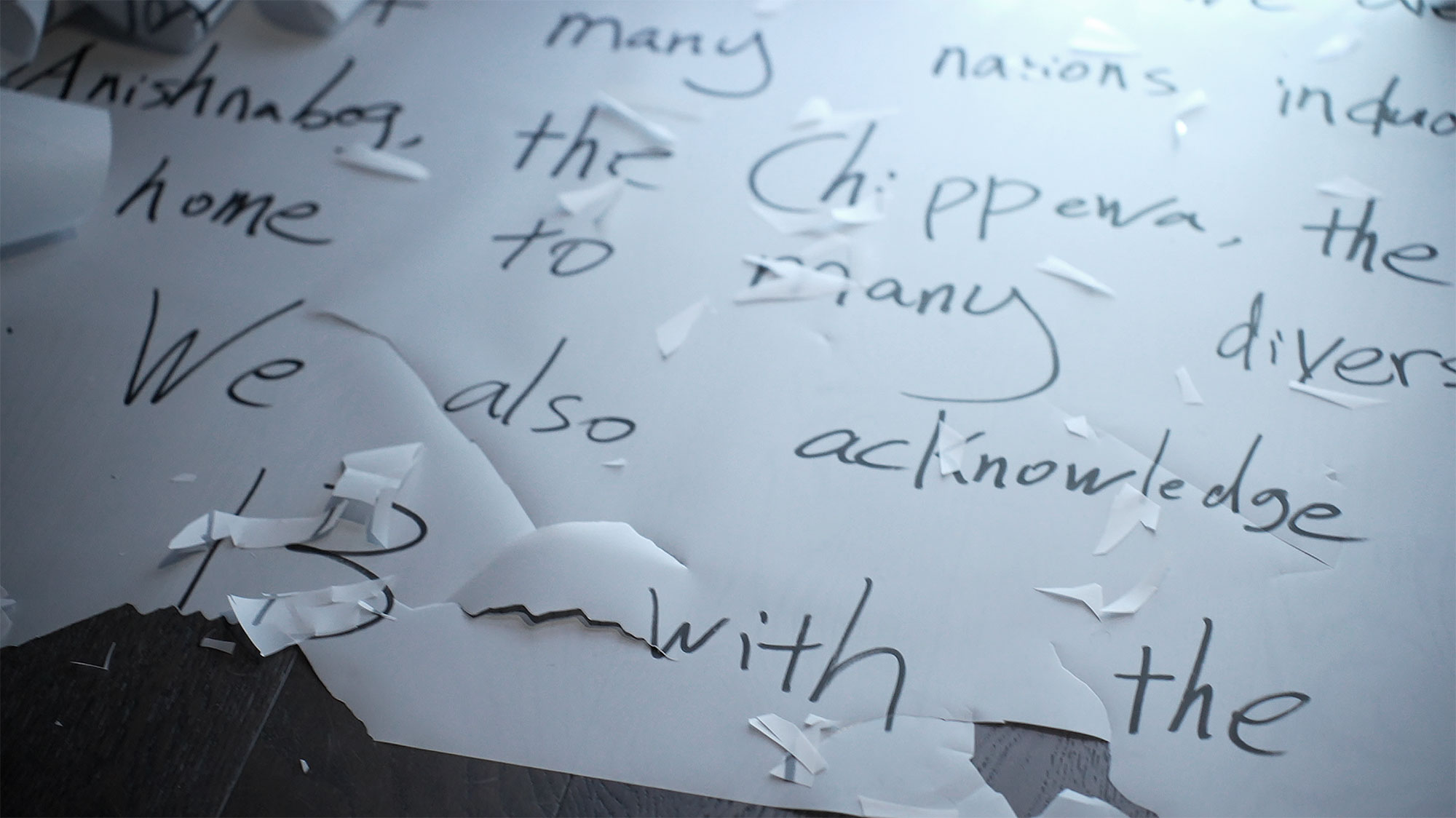
The projection spans four uneven white tables whose fragmented arrangement echoes the damaged paper created through the performance. Beneath the tables lies a cut and fragmented Land Acknowledgement statement. Often criticized as symbolic or performative, the statement is repositioned as a silent foundation of the installation, present yet overlooked, inviting reflection on the distance between acknowledgement and meaningful action.
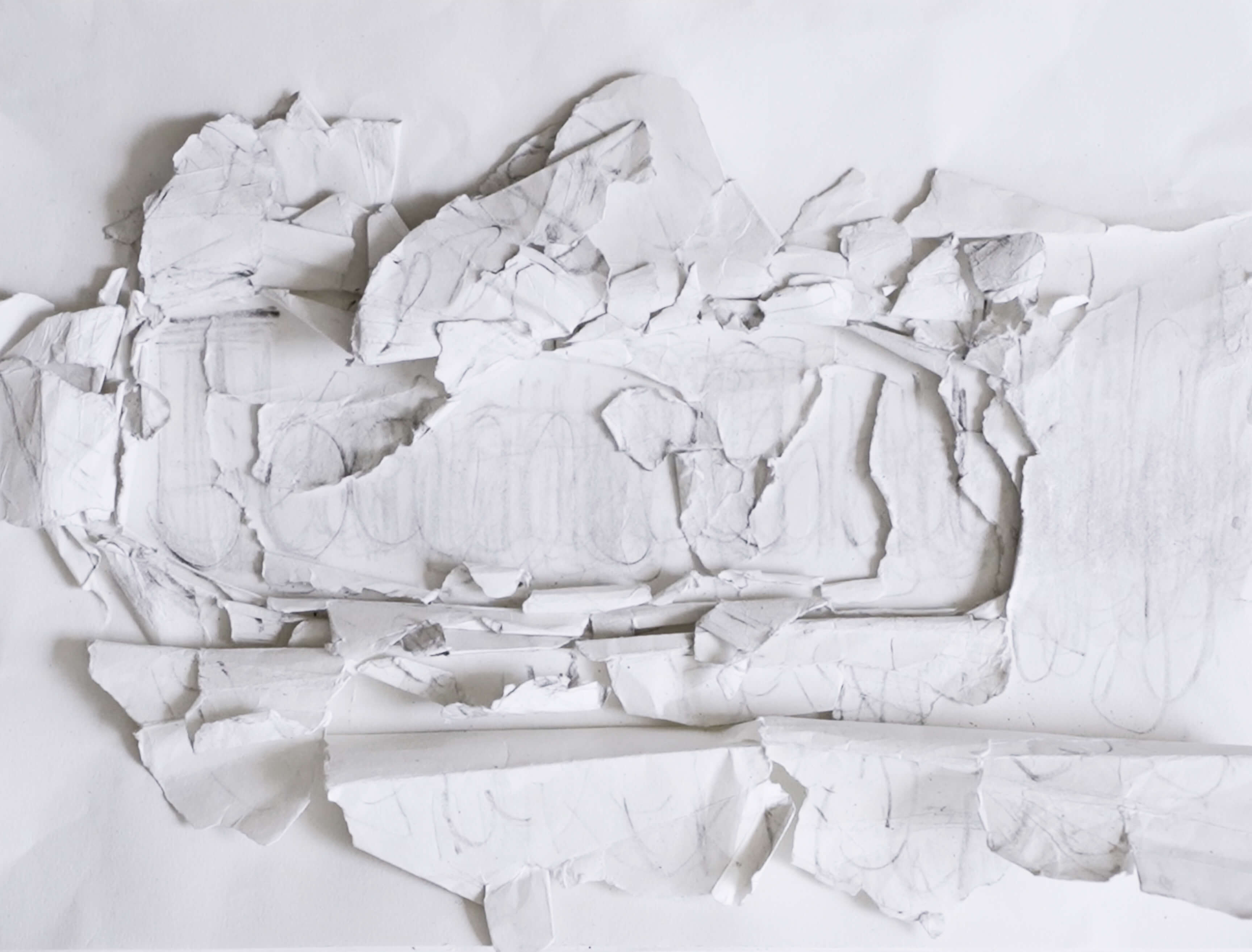
Watch InstallationThe physical remains of the twelve-hour performance become sculptural records of repetition, labor, and erasure.
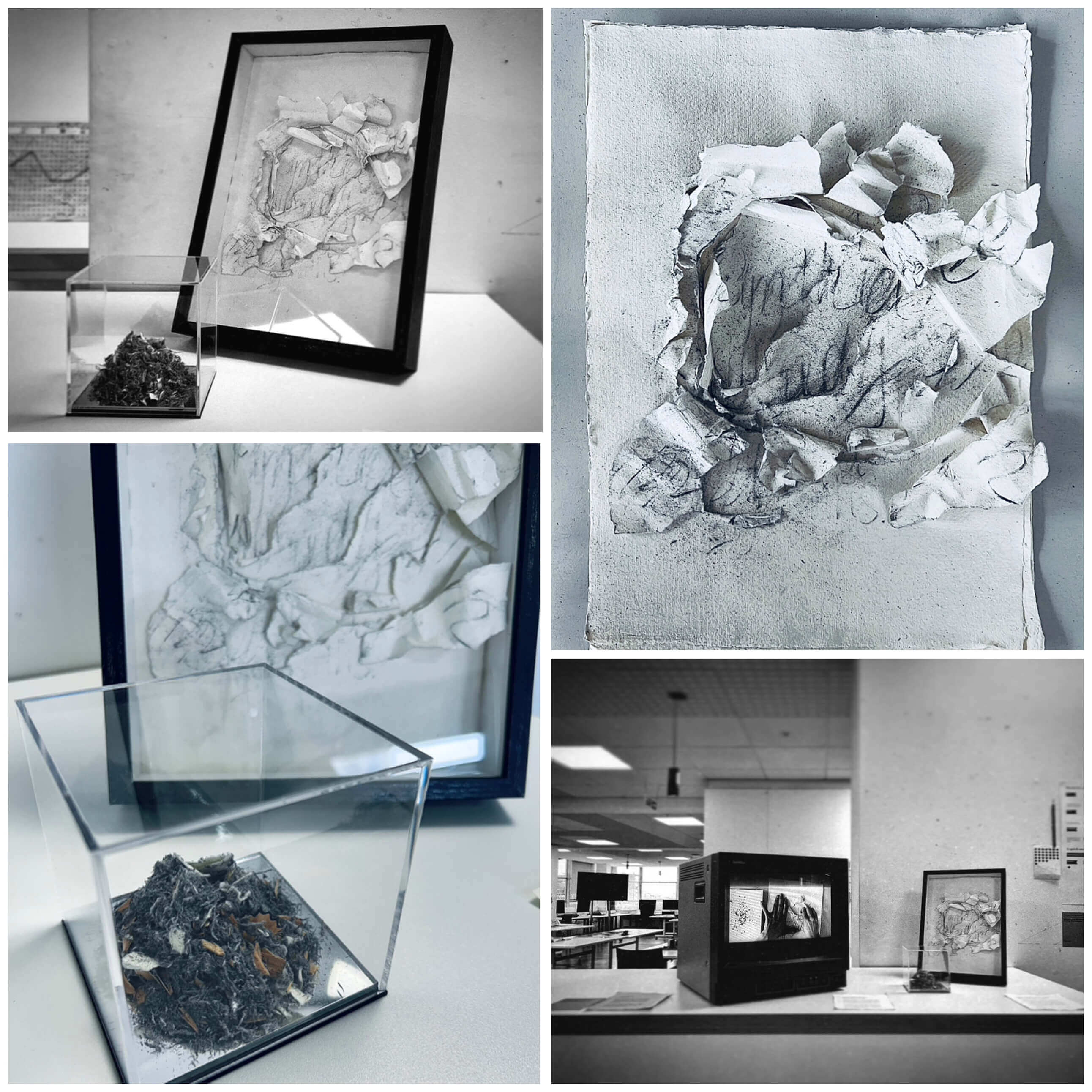
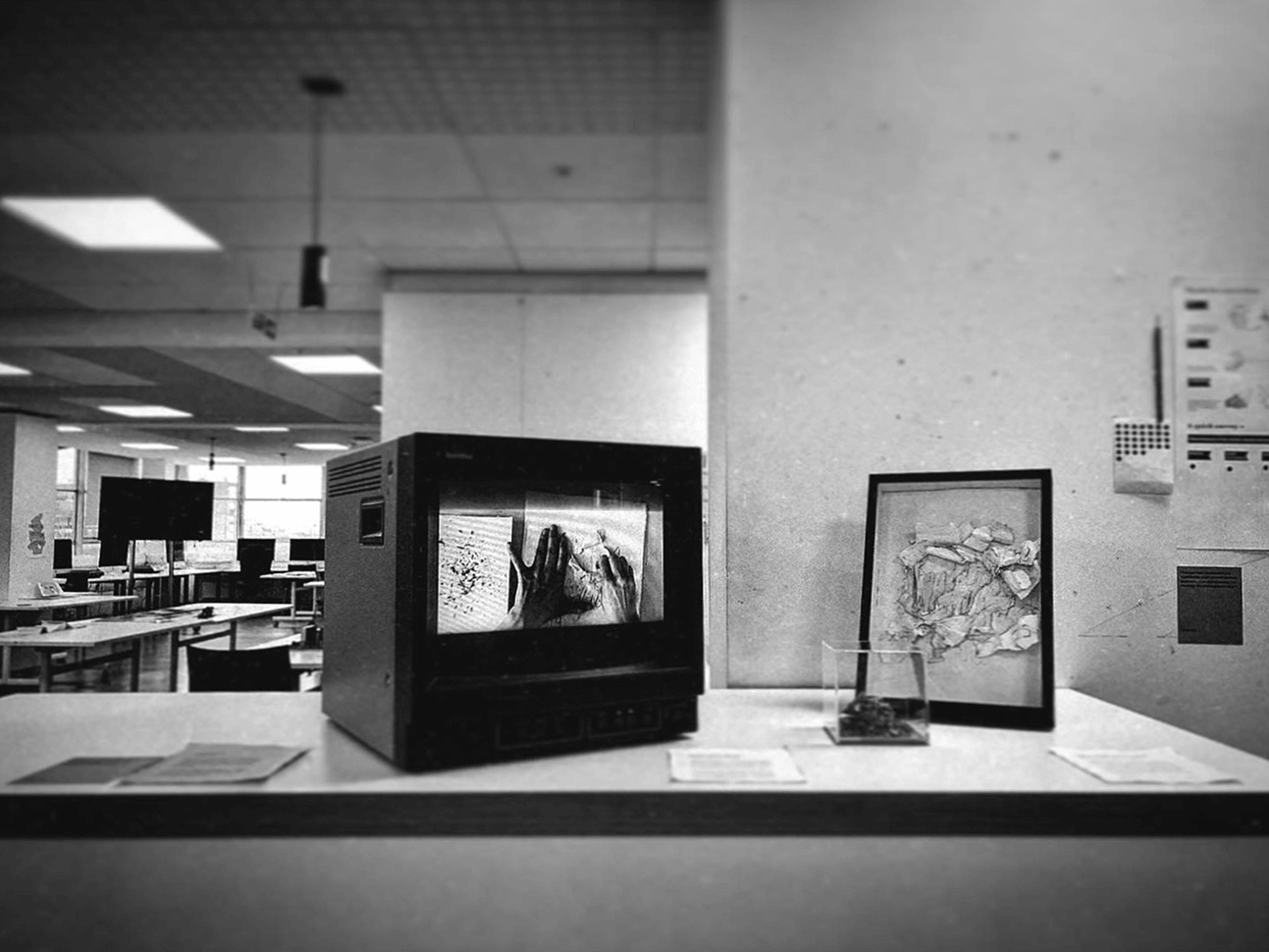
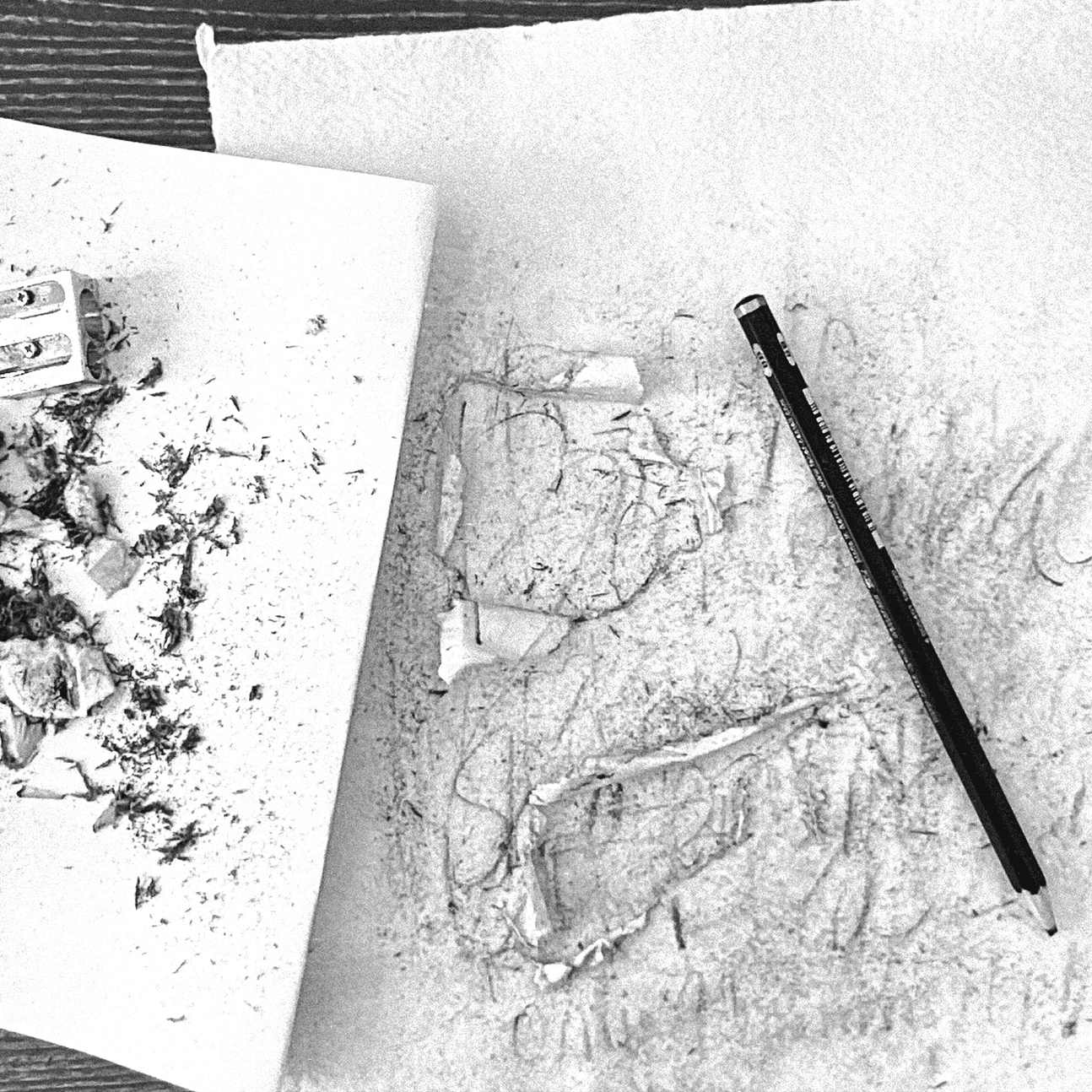
After more than 300 cycles of writing and erasing, the drawing paper is torn, scratched, and fragile. Although nearly blank, its damaged surface preserves the traces of names once written, becoming a quiet witness to lives that have been systematically overlooked. Framed as an object, the paper transforms absence into a tangible presence.
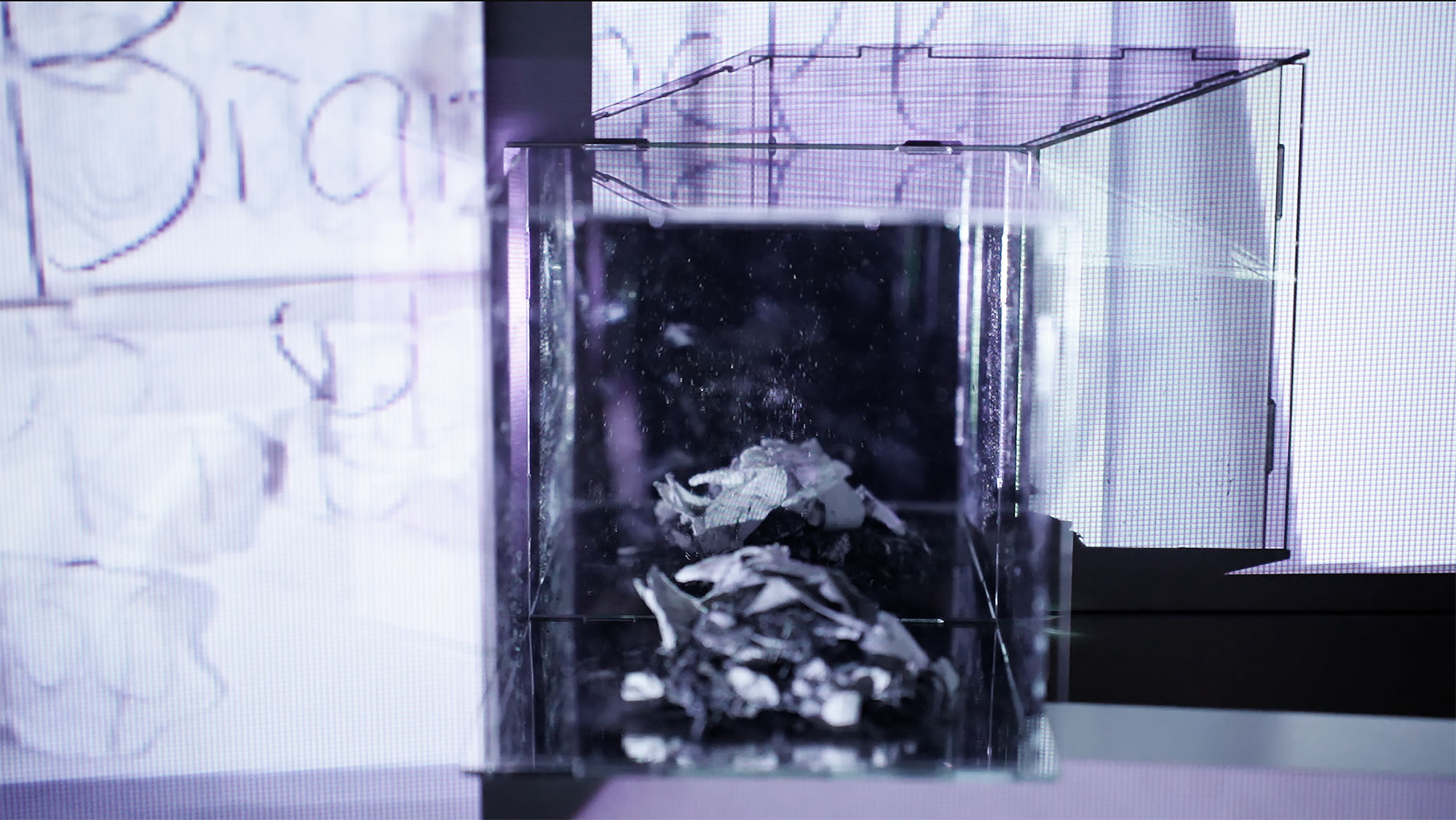
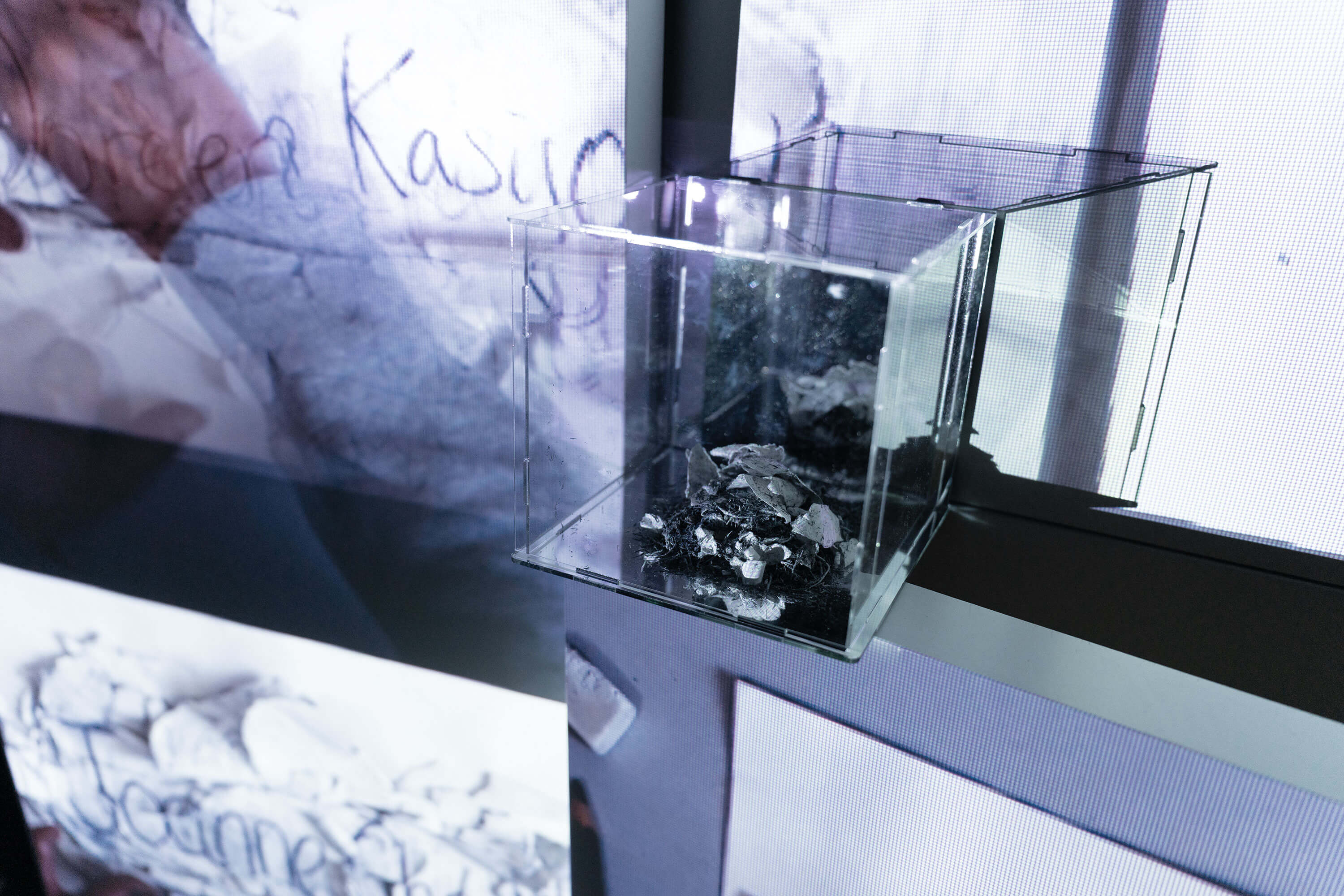
Collected throughout the performance, the eraser crumbs are presented in a glass box at the centre of the four projection tables. Resembling ashes, they are the material remains of erased names, evidence that each name was once written, each life once existed. Surrounded by the projected image, the glass box becomes the emotional core of the installation, where erasure leaves behind not emptiness but material traces of memory.
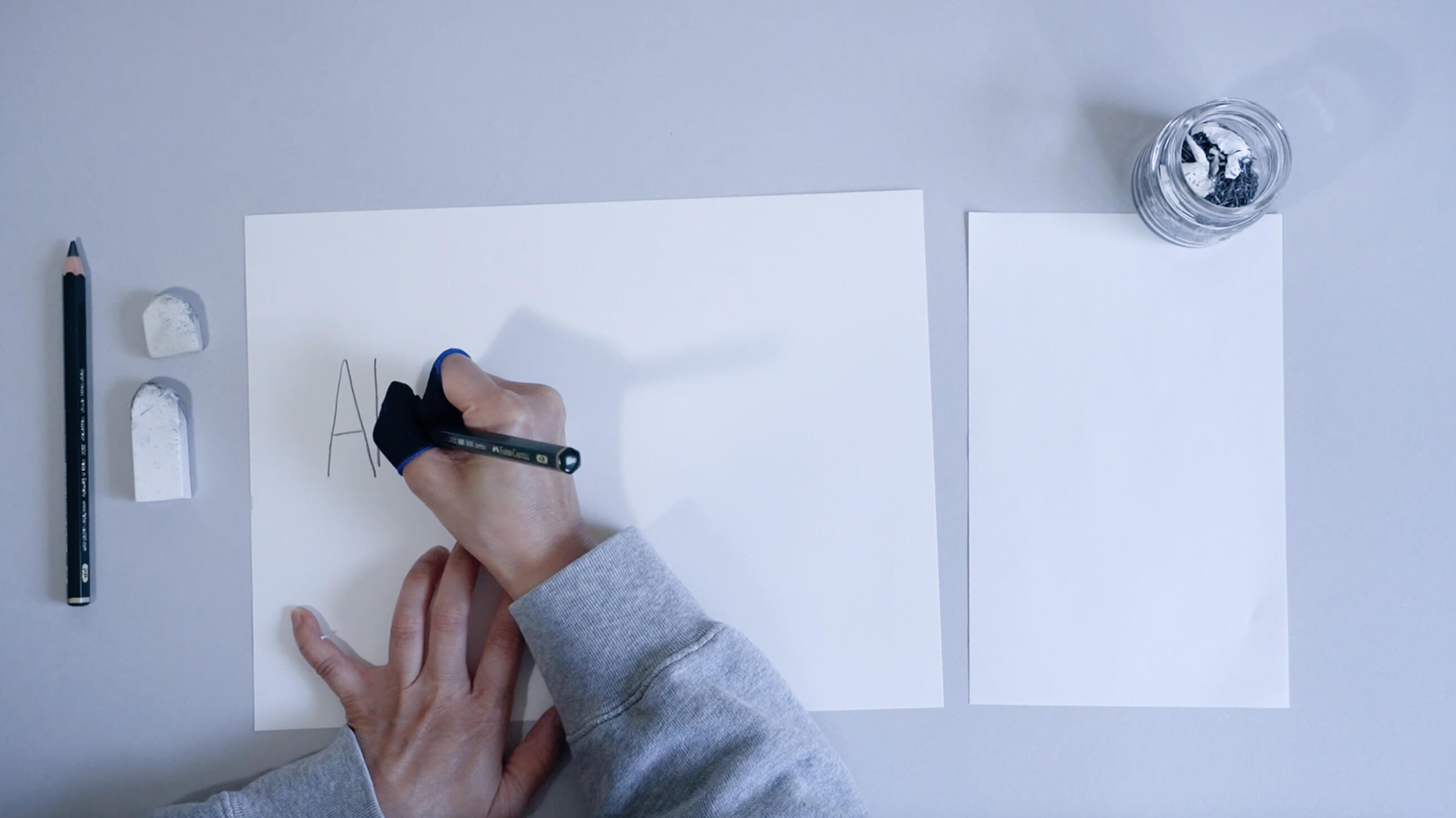
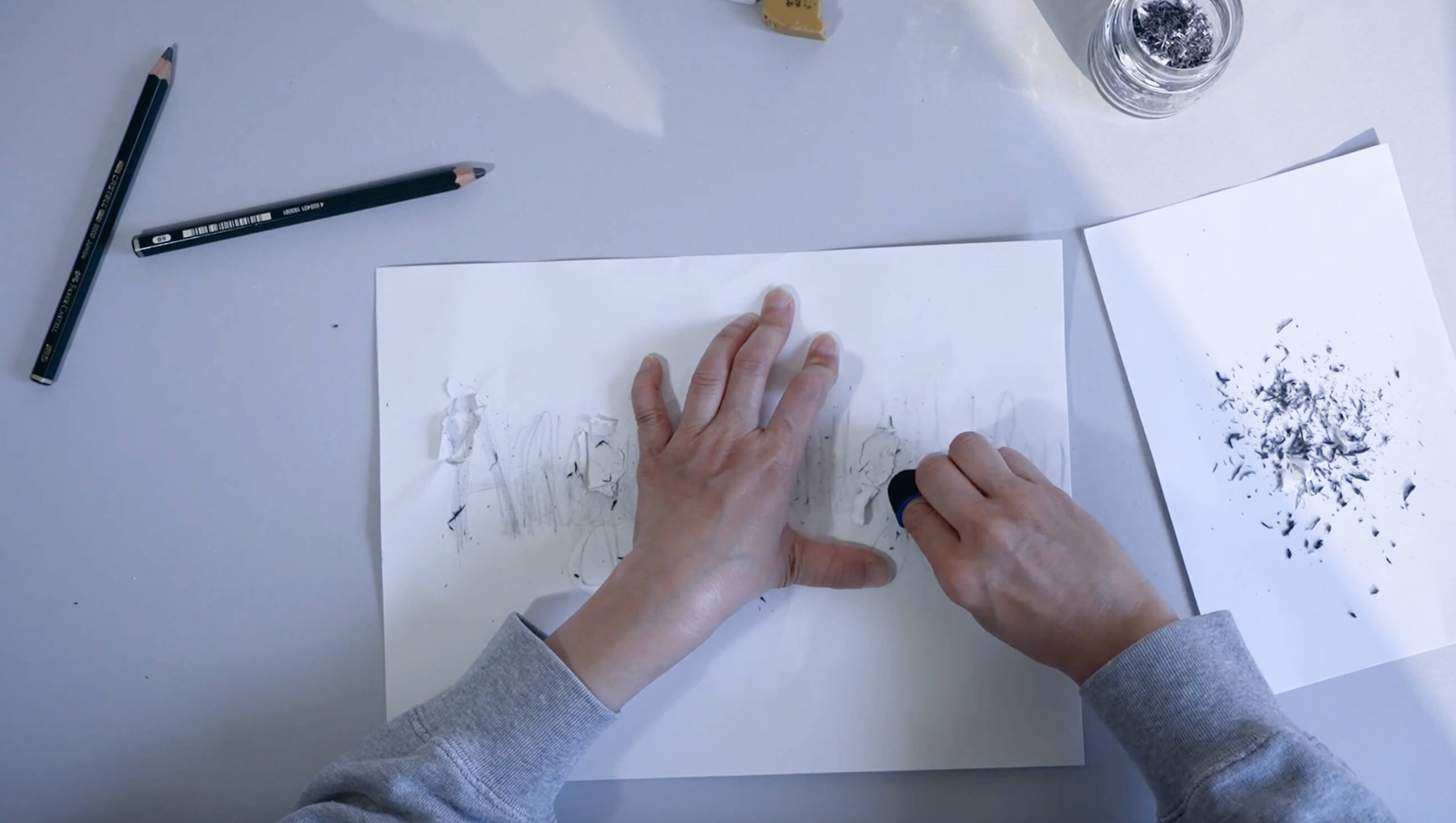
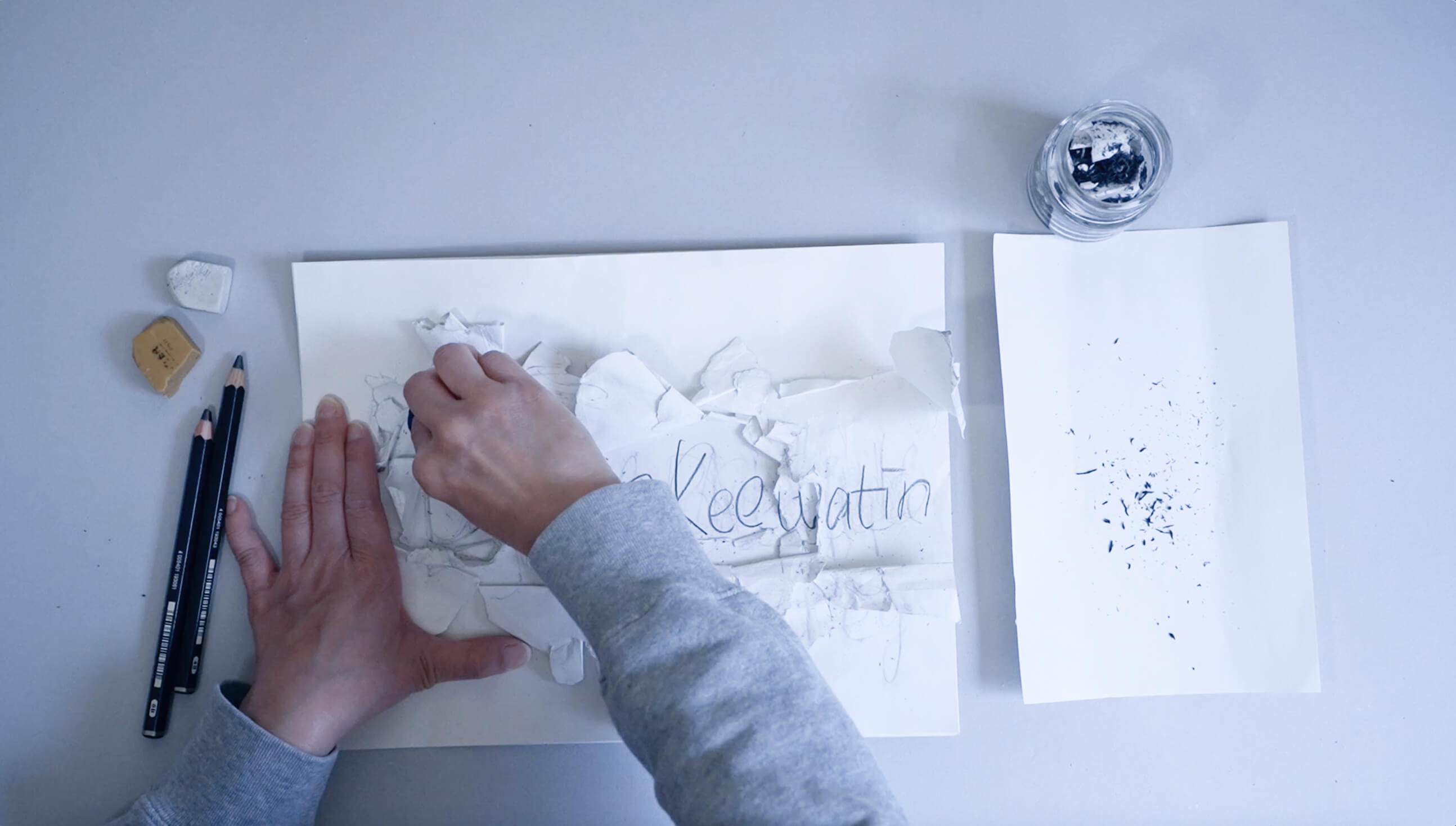
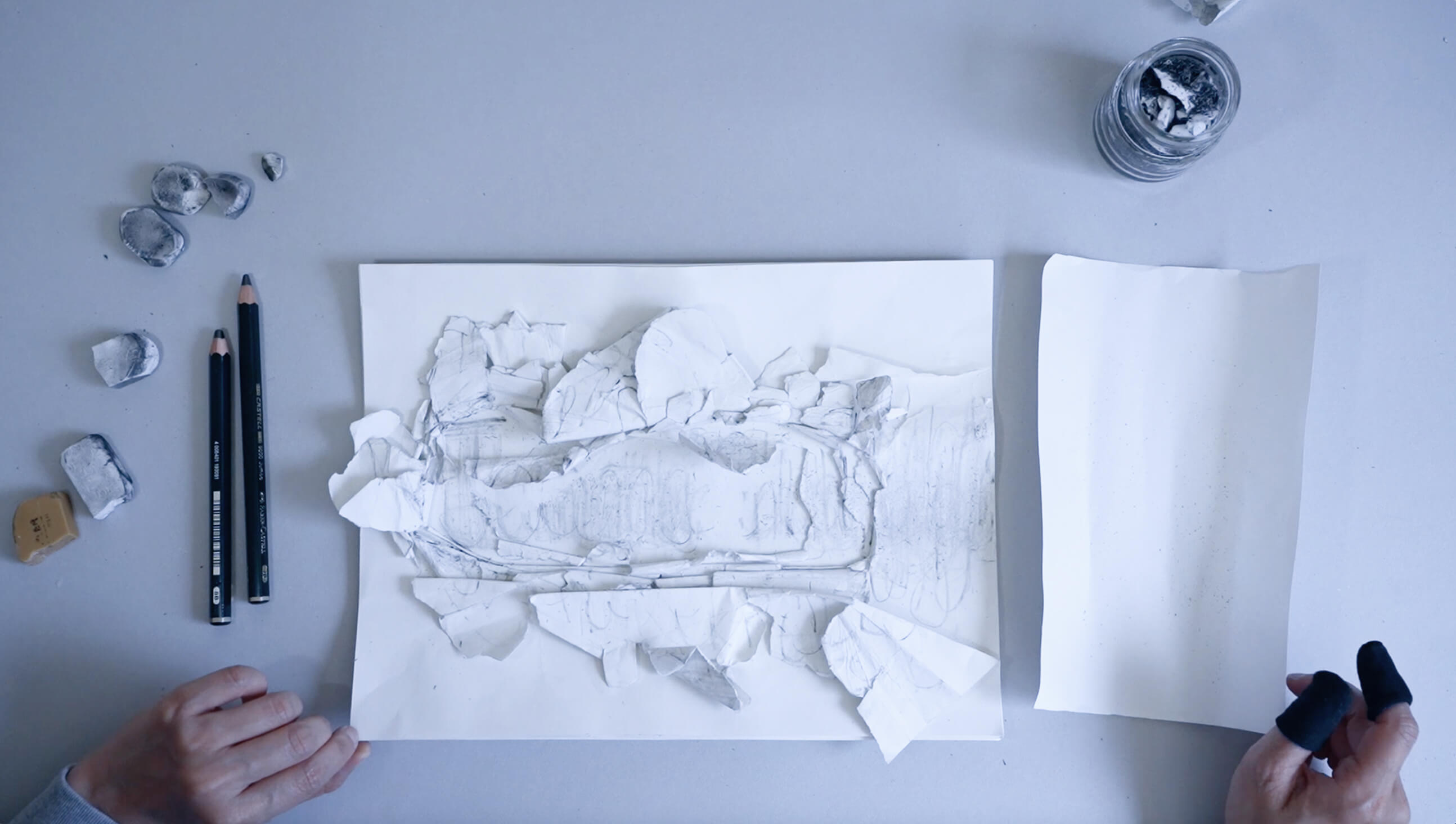
The projected video preserves the performance in real time while expanding it into multiple temporal experiences.
Several versions of the recording are presented throughout the installation: an accelerated sequence of writing and erasing; a real-time edit emphasizing the rhythm of repetition; a frame-by-frame record of the paper after each name is erased; and a version revealing every name before it disappears.
Rather than functioning as documentation alone, the projections transform the installation into an ongoing act of remembrance. Moving across the fragmented tables, framed paper, and glass box of eraser crumbs, the projected names temporarily return to the surfaces from which they were erased. Together, the performance, projection, and material traces create a space where absence is made visible, remembrance becomes an act of resistance, and data is transformed into lived experience.
Watch Footage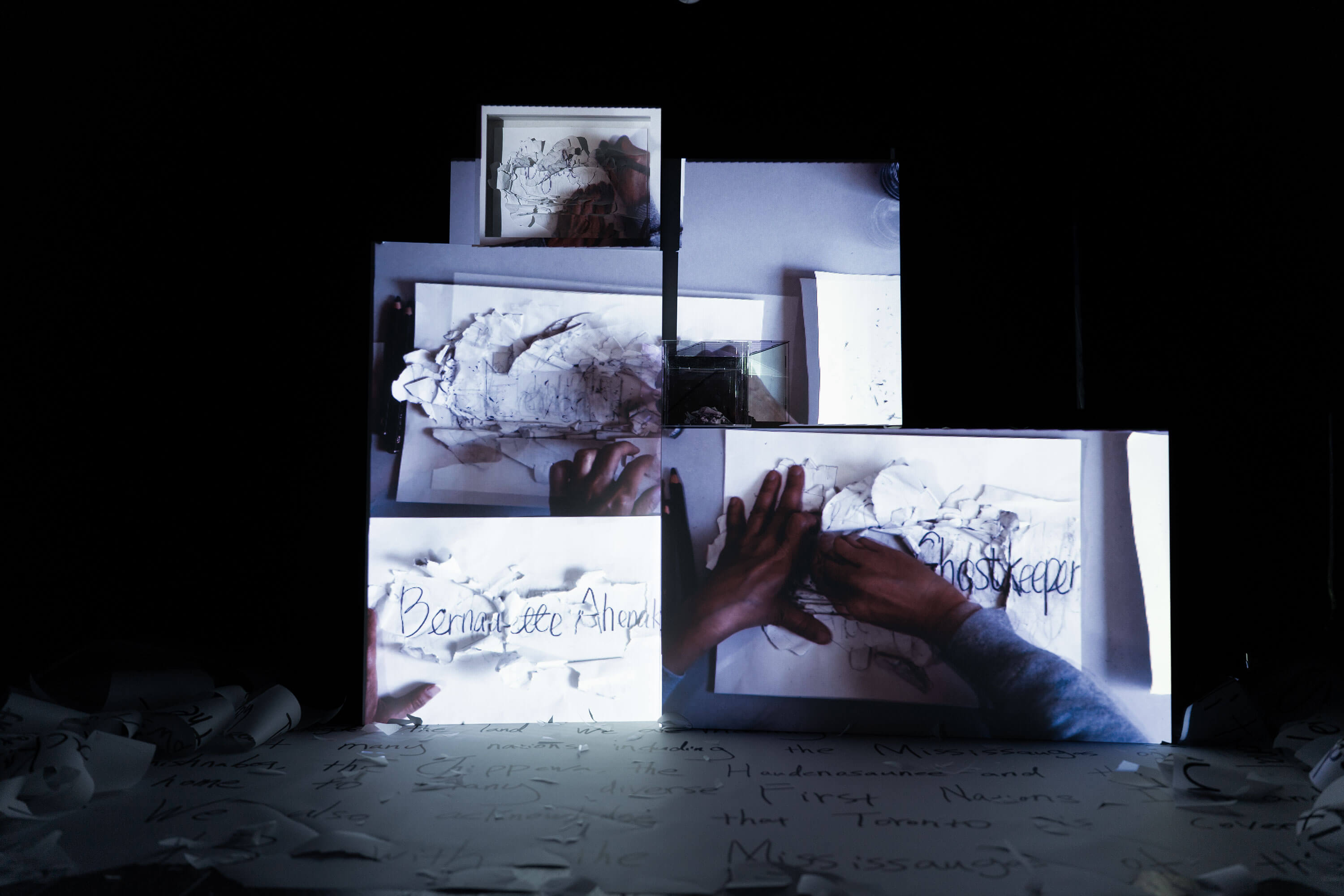
This project emerged from my broader research into intersectionality, exploring how overlapping social identities shape experiences of inequality, invisibility, and systemic violence. I focused specifically on Indigenous women in Canada, whose identities intersect through both gender and Indigeneity. Although Indigenous Peoples represent approximately 4% of Canada's population, Indigenous women and girls are 12 times more likely to be murdered or go missing than non-Indigenous women.
This disproportionate violence reveals how intersecting systems of colonialism, racism, and gender discrimination continue to produce structural inequities. To understand these experiences beyond statistics, I began tracing individual lives through CBC news' database, one of the most comprehensive public records of unresolved cases, despite no longer being updated. Rather than treating the dataset as numbers alone, I approached it as a collection of human lives, asking how arts and design could make systemic erasure visible while preserving dignity, memory, and presence.
The research initially explored conventional approaches to data visualization and infographic design. While effective at communicating information, these formats struggled to convey the emotional weight and lived realities behind the data. This led me to investigate data physicalization, embodied data, materiality, and performative visualization as alternative design methodologies. Instead of representing the dataset through charts, I transformed it into a twelve-hour act of writing and erasing, allowing time, repetition, and physical labour to become visual languages themselves.
Beginning with a blank sheet of paper and ending with another seemingly blank sheet, the work employs slow visualization, where meaning emerges through duration rather than instant readability. The worn paper, accumulated eraser crumbs, and projected performance become material traces of repeated gestures, revealing vulnerability, fragility, and persistence. Together, these elements transform data from something to be observed into something to be experienced, inviting viewers to encounter not only information, but also absence, remembrance, and the enduring impact of systemic erasure.
This project reflects both my empathy for the experiences of missing and murdered Indigenous women and my curiosity about how multidisciplinary art and design can expand the possibilities of data representation beyond communication, transforming information into embodied experiences of remembrance, reflection, and dialogue.
Throughout the research, I found myself continually questioning how data can be transformed into a more human experience. This led me to move away from conventional data visualization and toward performance, materiality, and projection, allowing repetition, time, and physical traces to become the visual language of the work. The installation marks an important stage in my ongoing exploration of data physicalization, performative visualization, and embodied design, while opening new possibilities for how complex social issues can be communicated through artistic practice.
Looking forward, I hope to continue developing this work through exhibitions, artist residencies, research collaborations, and interdisciplinary partnerships. The methodology, transforming datasets into performative actions and material traces, is intentionally flexible and can be adapted to other intersectional narratives that remain underrepresented. Future iterations may explore themes such as disability, migration, housing inequality, climate justice, LGBTQ+ communities, aging, or other forms of systemic marginalization. By continuing to experiment with new media, materials, and modes of participation, I hope to expand this practice into an evolving platform that transforms data into experiences of empathy, remembrance, and meaningful public conversation.